Tradle Answer Today with hints: January 6, 2026
Get daily Tradle game hints and answers to crack the toughest challenges effortlessly! Discover today’s Tradle solution, smart tips, and winning strategies that make every Tradle a breeze. The Answer for Today is what everyone’s searching for, and we’ve got you covered!
The complexity of today’s Tradle words is making guessing tricky for puzzle enthusiasts everywhere. But here’s the twist—when you see our solution, you’ll think, “We were so close to cracking it!” That satisfying “aha!” moment is just seconds away.
So let’s dive straight into today’s Tradle answer and hints without wasting another moment. Your winning streak starts right here, right now!
What is Tradle?
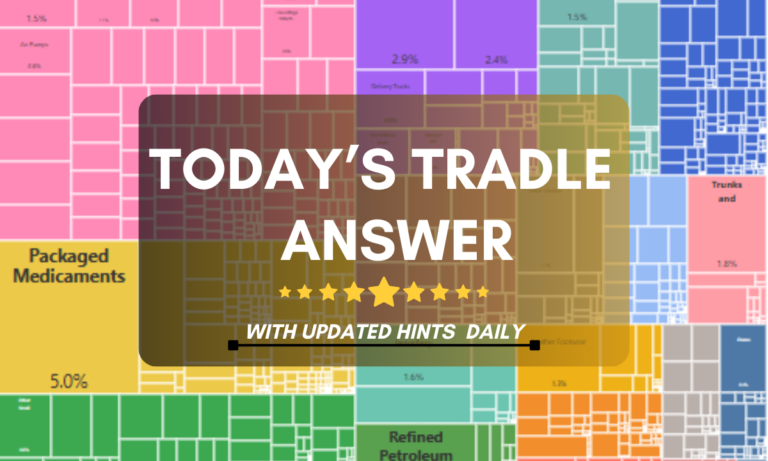
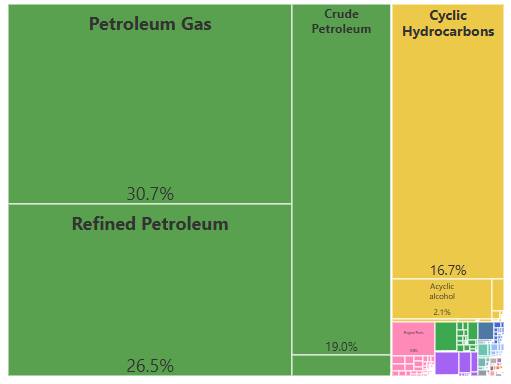
Tradle is a daily guessing game where you identify a country based on its export data. You see a tree map showing what that country exports—percentages broken down by category like “machinery,” “vehicles,” “agricultural products,” or “mineral fuels.”
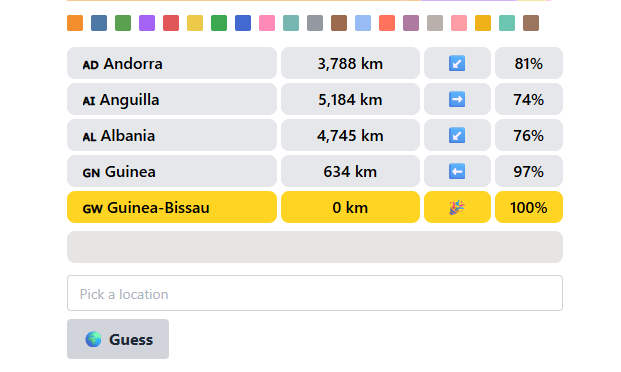
You get six guesses to identify the mystery country. After each guess, the game tells you how far away your guess was (in kilometers) and shows you the direction to the correct answer. It’s basically hot-and-cold with countries.
Created as part of the Wordle-clone wave in 2022, Tradle has stayed relevant because it’s genuinely educational. I’ve learned more about global trade patterns from three months of Tradle than I did from an entire semester of economics.
The game updates daily at midnight GMT. One puzzle per day, same puzzle for everyone worldwide, shareable results as emoji grids. The format is familiar if you’ve played Wordle, but the challenge is completely different.
Click To Reveal Hints
HINT 1: COUNTRY LOCATION?
Northern Europe, on the Scandinavian Peninsula. It borders Sweden, Finland, Russia, and the North Atlantic Ocean.
HINT 2: COUNTRY NAME STARTS WITH?
NOR
HINT 3: CAPITAL CITY OF COUNTRY?
Oslo
HINT 4: CURRENCY ?
Norwegian Krone (NOK)
HINT 5: LANGUAGE OF COUNTRY IS?
Norwegian (Bokmål and Nynorsk)
IF YOU GOT THE ANSWER THEN GO BACK TO THE GAME
TODAY'S ANSWER HERE
GUINEA-BISSAU
COUNTRY FAMOUS FOR: Fjords, Northern Lights, Vikings, oil & gas, clean environment, and high quality of life.
Interesting Fact: Norway experiences the Midnight Sun, where the sun does not set for weeks during summer in some parts of the country.
If you fail to find the answer, don’t worry. Try again tomorrow with a fresh mind.
MY SCORE
#Tradle #1396 4/6
🟩🟩🟩🟩🟨
🟩🟩🟩🟩⬜
🟩⬜⬜⬜⬜
🟩🟩🟩🟩🟩
Explore Today’s Hints for Other Trending Word Games ⬇️
What is Tradle?
Tradle is a daily guessing game where you identify a country based on its export data. You see a tree map showing what that country exports—percentages broken down by category like “machinery,” “vehicles,” “agricultural products,” or “mineral fuels.”
You get six guesses to identify the mystery country. After each guess, the game tells you how far away your guess was (in kilometers) and shows you the direction to the correct answer. It’s basically hot-and-cold with countries.
Created as part of the Wordle-clone wave in 2022, Tradle has stayed relevant because it’s genuinely educational. I’ve learned more about global trade patterns from three months of Tradle than I did from an entire semester of economics.
The game updates daily at midnight GMT. One puzzle per day, same puzzle for everyone worldwide, shareable results as emoji grids. The format is familiar if you’ve played Wordle, but the challenge is completely different.
Tradle: The Geography Trade Game That Tests Your World Knowledge
I failed my first Tradle in under 30 seconds. Stared at a pie chart showing export percentages, guessed “China” because doesn’t China export everything, and was wrong by about 8,000 miles.
Turns out Tradle isn’t about guessing the biggest economies—it’s about understanding what countries actually produce and trade. After 85+ daily puzzles, I’ve learned that success requires thinking like an economist mixed with a geography buff, not just randomly naming countries.
Here’s everything you need to know about Tradle, the Wordle variant that finally makes those high school geography lessons useful.
How Tradle Actually Works
When you open today’s Tradle, you see a colorful tree map. Each rectangle represents an export category, sized by percentage of that country’s total exports.
For example, you might see:
- Mineral fuels: 45%
- Machinery: 18%
- Vehicles: 12%
- Agricultural products: 8%
- Chemicals: 7%
- Other: 10%
Your job is identifying which country matches this export profile. You type a country name, submit your guess, and the game responds with distance and direction.
If you guess “Germany” and the answer is Poland, the game might say “652 km, Northeast ↗.” This tells you the correct answer is 652 kilometers northeast of Germany. Each subsequent guess should get you closer.
The tree map is interactive—you can hover over sections to see exact percentages and subcategories. This detail is crucial because “machinery” might break down into “computers,” “industrial equipment,” or “electrical machinery,” each pointing toward different countries.
Why Export Data Makes This Hard
I thought Tradle would be easy. I’m decent at geography, I can name most countries, how hard could it be?
Very hard, it turns out.
The problem is most people don’t think about what countries actually export. Quick: what’s Saudi Arabia’s biggest export? If you said oil, congrats—that’s obvious. Now what’s Switzerland’s biggest export? Or Vietnam’s? Or Belgium’s?
These aren’t intuitive. I guessed Switzerland exports watches and chocolates. Wrong—it’s actually pharmaceuticals and chemicals (about 45% of exports). Vietnam? I guessed rice. Wrong again—it’s electronics and textiles (about 35% combined).
Your mental model of “what countries are known for” rarely matches their actual export data. Japan is famous for cars, but machinery and electronics are nearly equal exports. Canada is known for maple syrup culturally, but actually exports mostly vehicles and machinery.
This mismatch between perception and reality is what makes Tradle challenging and educational. You’re forced to think about actual economic data, not stereotypes.
My Strategy After 85 Games
Here’s the approach that took my success rate from 58% to 79%:
Guess 1: Use the biggest export category as your anchor.
If 45% of exports are mineral fuels, I immediately think oil/gas producing countries: Saudi Arabia, Russia, Norway, UAE, Kuwait. If 40% is machinery, I think Germany, China, Japan, South Korea.
This first guess is usually wrong, but it gives me a directional starting point. When I guess Saudi Arabia and the game says “3,200 km Northwest,” I know I’m looking at a different Middle Eastern or North African country.
Guess 2: Combine direction with export profile.
After guess 1, I have direction and distance. Now I look at the export breakdown more carefully. If it’s mineral fuels + direction pointing to Central Asia, maybe Kazakhstan. If it’s machinery + direction toward East Asia, maybe South Korea or Taiwan.
The key is using geography AND economics together. Don’t just follow the arrow—follow the arrow while considering what countries in that region actually produce.
Guess 3-4: Narrow by region and specialization.
By guess 3, I’m usually in the right region. Now I look for distinctive export signatures. Does this country export a lot of agricultural products? That eliminates city-states like Singapore. A lot of vehicles? That narrows it to industrial economies.
Some countries have extremely distinctive signatures. If you see 60%+ mineral fuels, it’s almost certainly a petro-state. If you see balanced exports across many categories, it’s probably a diversified economy like Germany or France.
Guess 5-6: Educated guessing within the region.
By this point, I’ve narrowed it to maybe 3-5 countries. These final guesses are often 50/50 shots. Is it Poland or Czech Republic? Both are Central European, both export machinery and vehicles. I look for subtle differences in the percentages to make the final call.
Countries That Constantly Trick Me
After 85 games, certain countries still fool me regularly.
Belgium appears way more often than I’d expect for a small country. Its export profile (chemicals, machinery, vehicles) looks similar to Germany or Netherlands, so I always guess those first.
Kazakhstan keeps catching me off-guard. Massive country, exports mostly mineral fuels and metals, but I forget it exists until the direction arrows point me toward Central Asia.
Vietnam tricks me because its export profile (electronics, textiles, machinery) looks like it could be Thailand, Indonesia, or Malaysia. These Southeast Asian industrial economies are hard to differentiate.
Ireland has a weird export profile dominated by pharmaceuticals and chemicals thanks to all the companies with tax headquarters there. I’ve mistaken it for Switzerland three times.
Small Gulf states (Kuwait, Qatar, Bahrain, UAE) all look identical in export data—mostly mineral fuels. When I’m pointed toward the Persian Gulf, it becomes a guessing game of which small petro-state it is.
What I’ve Learned About Global Trade
Tradle is accidentally educational. Here are patterns I’ve internalized:
Oil exporters dominate by percentage. When one category exceeds 60%, it’s almost always mineral fuels, and the answer is Saudi Arabia, Iraq, Kuwait, Russia, or another petro-state. Oil’s economic dominance is staggering.
East Asia exports electronics and machinery. China, Japan, South Korea, Taiwan, Vietnam—these countries’ export profiles heavily feature manufactured goods. This makes them hard to differentiate, but at least you know the region.
European countries have diverse exports. Germany, France, Italy, UK—these large European economies export machinery, vehicles, chemicals, and pharmaceuticals in fairly balanced percentages. The diversity makes them harder to identify.
Small countries specialize. Luxembourg exports financial services and specialized machinery. Switzerland exports pharmaceuticals. Singapore exports refined petroleum and electronics. Small economies can’t compete across all sectors, so they specialize intensely.
Agricultural exporters are rarer than you’d think. Even in countries known for agriculture (Brazil, Argentina, Australia), agricultural products rarely exceed 30% of exports. Modern economies export manufactured goods more than raw commodities.
Tips for Beginners
If you’re just starting Tradle, here’s what I wish I’d known:
Learn the major export categories. “Mineral fuels” = oil and gas. “Machinery” = industrial equipment, computers, tools. “Vehicles” = cars, trucks, ships, aircraft. “Precious stones” usually means diamonds or gold. Knowing what these categories actually include helps you identify countries.
Think regional patterns. Middle East = oil. East Asia = electronics. Europe = diverse manufacturing. South America = mix of commodities and manufacturing. Africa = minerals and agriculture. These broad patterns help you start in the right area.
Use the direction arrows aggressively. Don’t just guess countries you know—follow the directional guidance. If you guess Brazil and it says “5,000 km Northeast,” you’re probably looking at somewhere in West Africa. Let the arrows guide your regional thinking.
Don’t overthink small differences. If you’re down to two similar countries (Poland vs Czech Republic, Thailand vs Vietnam), just pick one. The export data for similar economies is often too close to differentiate without specialized knowledge.
Play daily to build pattern recognition. After 20-30 games, you’ll start recognizing export signatures instinctively. “Oh, 45% machinery and 25% vehicles? That feels like Germany or Japan.” This intuition only comes from repeated exposure.
Why Tradle is Worth Playing
I play Tradle daily right after Wordle, and honestly, I find it more interesting.
Wordle tests vocabulary, which is fine. But Tradle tests global awareness—understanding what different countries actually produce and where they fit in the world economy. That feels more relevant to understanding how the world works.
The educational value is real. I now know that Ireland is a pharmaceutical powerhouse, that Kazakhstan is Central Asia’s largest economy, and that Vietnam is a major electronics manufacturer. These aren’t trivia—they’re useful context for understanding global news and economics.
The difficulty is perfect. Hard enough that I fail about 20% of my attempts, easy enough that success feels earned rather than lucky. Most puzzles I solve in 4-5 guesses, which is satisfying without being frustrating.
The time investment is minimal. Each puzzle takes 3-5 minutes, making it a perfect coffee break activity alongside Wordle and whatever other daily games you play.
Getting Started
Tradle lives at oec.world/en/tradle. No app, no account needed, just open the site and play.
Your first 10 attempts will probably humble you. That’s normal. You’re building mental maps of export patterns from scratch. By attempt 20, you’ll start recognizing signatures. By attempt 50, you’ll be solving most puzzles in 4-5 guesses.
My advice: don’t get discouraged when you fail. Use failures as learning opportunities. When you miss a country, study its export profile. Why does Belgium export so many chemicals? Why is Vietnam strong in electronics? Understanding the “why” makes you better at future puzzles.
Give it a week of daily play. If you enjoy geography, economics, or just learning about how the world works, Tradle is probably your game. If you hate those subjects, maybe skip this one—there’s no shame in admitting not every Wordle variant is for everyone.
For me, it’s become a permanent part of my morning routine. Wordle, then Tradle, then I actually start my day slightly smarter about global trade than I was yesterday.

Rajat Singhaal is the founder and lead writer of this website, with over one year of experience in the gaming industry. He focuses on researching and creating high-quality content related to online games, with a particular expertise in word puzzle and logic-based games. In his free time, Rajat actively plays and analyzes puzzle games to stay updated with gameplay trends and strategies. He holds a Bachelor of Commerce (B.Com) degree.
📧 Contact: rajatsinghaal22@gmail.com

Rajat Singhaal is the founder and lead writer of this website, with over one year of experience in the gaming industry. He focuses on researching and creating high-quality content related to online games, with a particular expertise in word puzzle and logic-based games. In his free time, Rajat actively plays and analyzes puzzle games to stay updated with gameplay trends and strategies. He holds a Bachelor of Commerce (B.Com) degree.